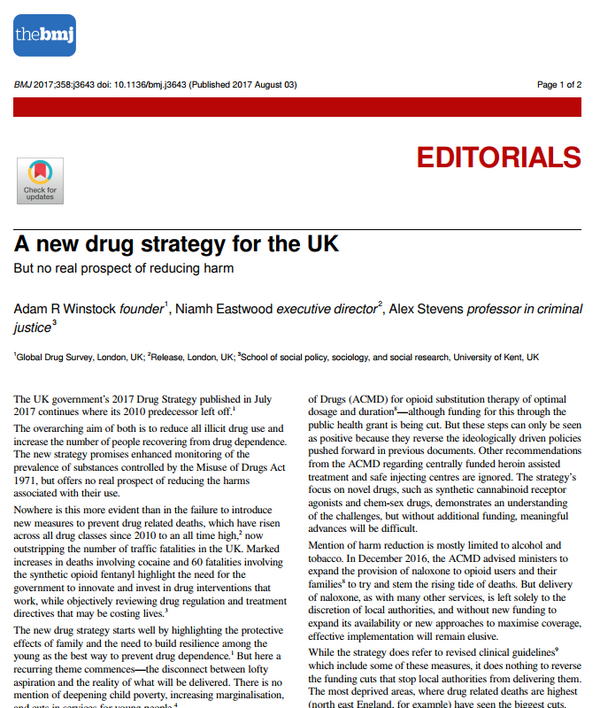
Winstock, Eastwood y Stevens desgranan cómo la nueva estrategia de drogas del Reino Unido, casi desprovista de iniciativas de reducción de daños, no logrará reducir el creciente número de muertes relacionadas con sustancias.
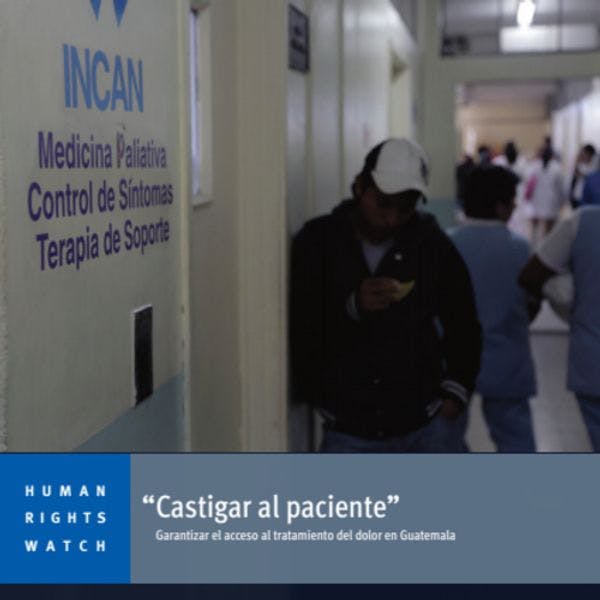
Human Rights Watch ha comprobado que la falta de medidas en Guatemala para garantizar el acceso a cuidados paliativos condena a numerosos pacientes a un sufrimiento que podría ser evitado, y esto tiene consecuencias devastadoras para ellos y sus familias.
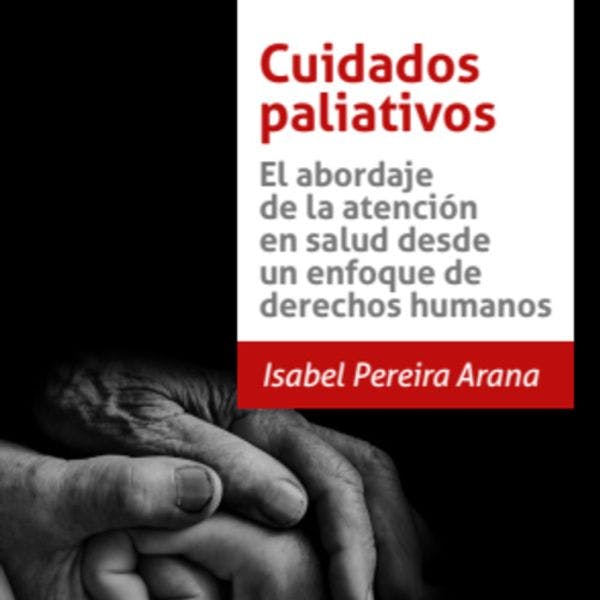
Este informe escrito por DeJusticia recoge los resultados de una investigación realizada con el objetivo de dar cuenta de la situación actual de los cuidados paliativos en ocho países de Latinoamérica.
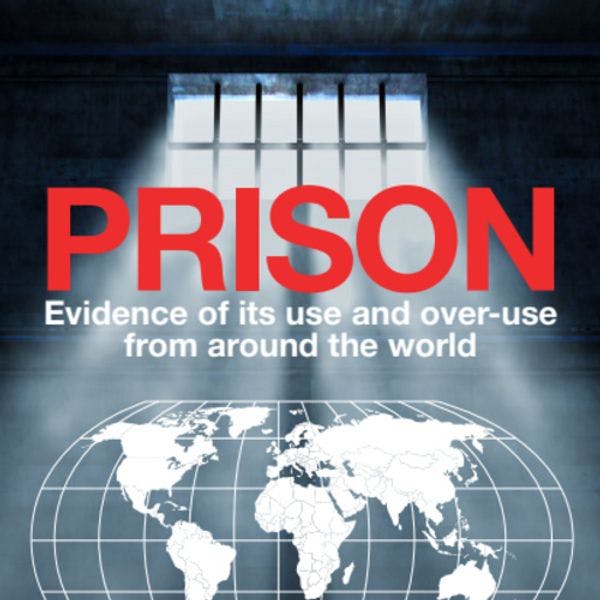
El Instituto de Investigación sobre Políticas Penales (ICPR) analiza el crecimiento de la población penitenciaria en todo el mundo y recomienda estrategias para que se recurra menos al uso de las cárceles.
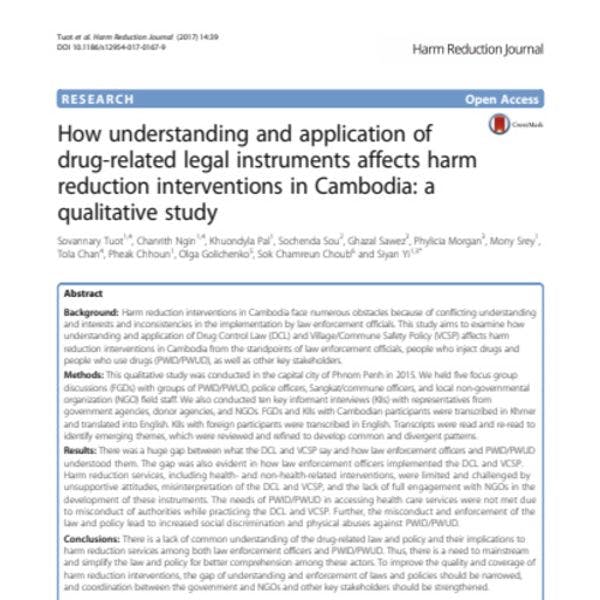
Tuot et al. desvelan una brecha de información en torno a la ley relacionada con las drogas, tanto en la aplicación de esta como entre las personas que utilizan sustancias, que actúa como un obstáculo para las intervenciones de reducción de los daños.
La organización Drug Policy Alliance sostiene que la despenalización de las drogas representa un paso crítico para lograr una política racional, que sitúe a la ciencia y la salud pública por encima de los castigos y los encarcelamientos.
El Observatorio Europeo de las Drogas y las Toxicomanías (OEDT) presenta su informe anual sobe el uso de drogas, los retos para la salud pública y las respuestas normativas en Europa.