Killing “narco-terrorists” at sea: The legality of military attacks on criminal groups and drug trafficking under international human rights law and other applicable international law
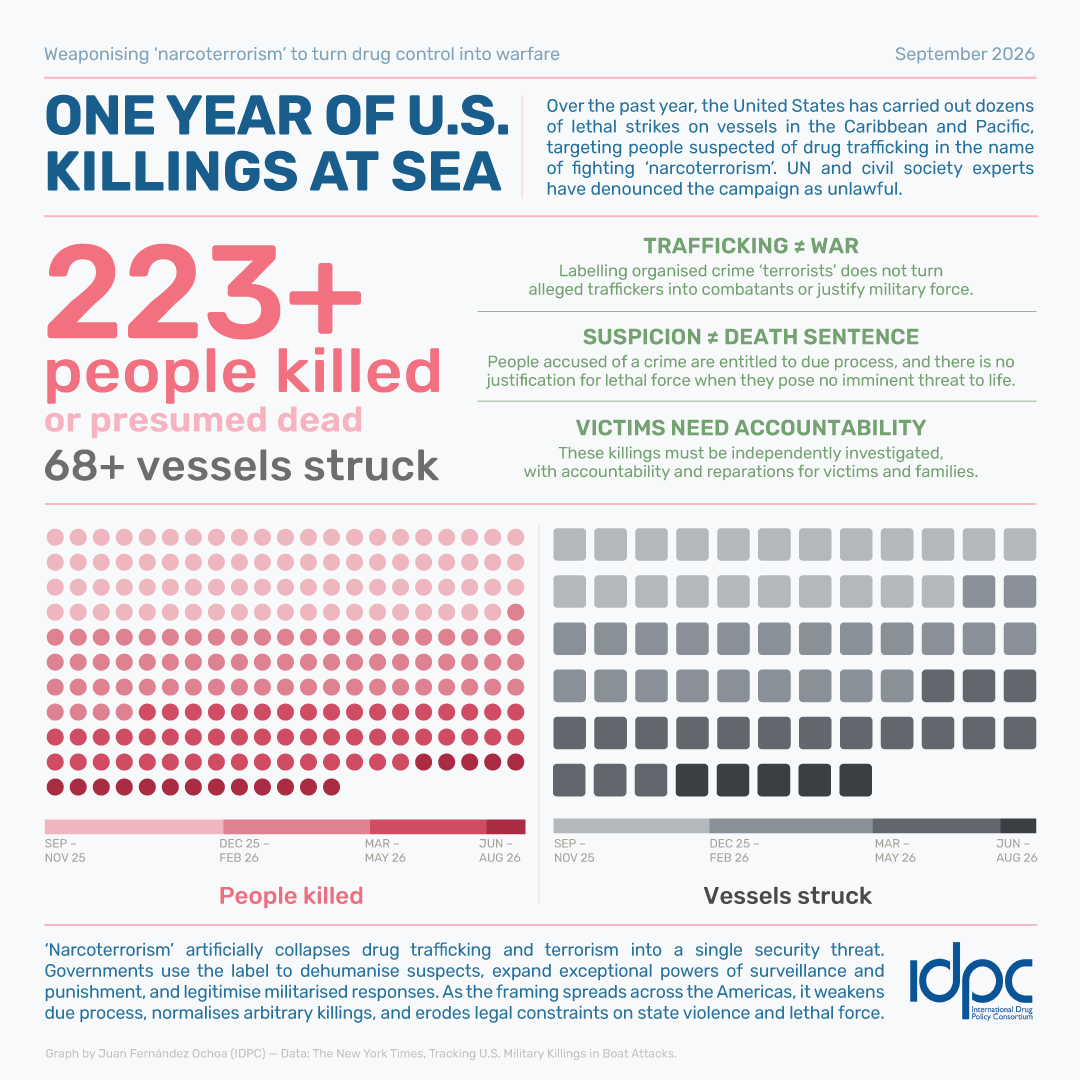
In one year since September 2025, the United States military has reportedly attacked 68 vessels, beyond the territorial sea of any State, which allegedly involved drug trafficking by criminal groups designated as “terrorist” under national law, killing at least 223 people. The attacks have been defended as lawful national self-defence and under international humanitarian law. Targeting “narco-terrorists” at sea is a new tactic that goes beyond prior practices of maritime interception and law enforcement. Particularly given its precedent-setting character and impact on the human right to life, it warrants close scrutiny for its consistency with international law. Military cooperation against drug cartels and gangs on land has also increased in the Americas, including under the “Shield of the Americas” initiative.
This Briefing Note examines how international human rights law governs such attacks at sea, interpreted in conjunction with other relevant international law. It finds that such attacks amount to serial extrajudicial killings in violation of the right to life, being unjustified in national or personal self-defence or under international humanitarian law, the international law of the sea, narcotics suppression conventions, or international counter-terrorism law. It also briefly addresses the legal and policy implications of increased military cooperation on land and sea against criminal groups in the Americas.
This Briefing Note consolidates and explains the extensive prior engagement on these issues by Special Procedures mandate holders since 2025, including through: communications and associated public statements; thematic reports to and interactive dialogues at the General Assembly and Human Rights Council; sessions of the Commission on Narcotic Drugs and the Commission on Crime Prevention and Criminal Justice; a detailed legal submission to and thematic hearing of the Inter-American Commission on Human Rights; and engagement with national institutions.
Wider, related human rights concerns about classifying and responding to organized crime as “terrorism” are addressed in the Special Rapporteur’s 2026 report to the General Assembly (A/81/227).