
The REFORM Project: Growing the drug policy reform movement in Southeast Asia


In Southeast Asia, civil society advocacy for drug policy reforms, especially for harm reduction and decriminalisation, has persisted over decades, even in the face of horrific human rights violations. While countries such as Indonesia, Malaysia and Thailand have made significant strides in pursuing drug law reforms, critical gaps remain throughout the region in achieving policy changes that are grounded in harm reduction and human rights. Consequently, people who use drugs remain criminalised and subject to widespread rights violations, including extrajudicial killing, arbitrary detention, and inadequate access to justice, harm reduction, voluntary, evidence-based drug dependence treatment and other basic health and social services. The entrenched stigma they face from all sectors of society further pose significant barriers to ensuring individual well-being.
In recent years, some of the major challenges identified by drug policy reform advocates have been limited access to legal expertise to navigate criminal justice and legislative processes, and a lack of robust media engagement strategies to challenge entrenched attitudes against harm reduction and decriminalisation. This is further compounded by the historical exclusion of impacted communities and civil society from drug policy processes in the region, amidst the broader context of heightened authoritarianism and shrinking civil society space.
The REFORM Project: Building coalitions with legal, media and communities at country and regional levels
The need to address the challenges outlined above and drive forward reforms brought together a coalition of civil society organisations from five Southeast Asian countries (Indonesia, Malaysia, Myanmar, Philippines, and Thailand) with IDPC as the regional coordinator under the REFORM project. The project started in 2022 and is funded by the Elton John AIDS Foundation. o It ends in June 2026, and includes substantial investment in monitoring, evaluation and learning to assess, with qualitative and quantitative analysis, the impacts of the project’s work in engaging legal service providers, media, and communities directly impacted by drug policies to advocate in coalition for policy change.
The project has sought to bridge the gap between government policymakers and stakeholders, communities of people who use drugs with intersectional vulnerabilities, civil society organisations, legal service providers, and journalists. Through these efforts many positive steps have been made towards achieving decriminalisation reforms grounded in a genuine harm reduction approach - as has been captured in the project’s Final Evaluation Report.
Impactful, intersectional and interconnected advocacy
The REFORM project enabled partners in the region to strategically intertwine diverse streams of advocacy and coalition-building into a coordinated movement, resulting in concrete legislative shifts such as the progression of the Narcotics Bill revision agenda in Indonesia and the official endorsement of the community-led comprehensive harm reduction service model proposed by partners in Thailand.
At the regional level, the project enabled rare opportunities for exchange between civil society and government officials across the Association of Southeast Asian Nations (ASEAN). This was notably demonstrated by the regional dialogue on the ASEAN Work Plan on Drugs organised by IDPC in August 2025, and the first-ever official dialogue on drug policy and human rights hosted by the ASEAN Intergovernmental Commission on Human Rights (AICHR) in October 2025.
The work of the project to include legal and media actors in training workshops and strategy consultations contributed to positive shifts in the legal and media landscape; and significantly strengthened the protection of human rights and dignity of people who use drugs under current drug laws. Through targeted engagement with journalists, including the Press Council in Indonesia, stigmatising narratives are being replaced by rights-based and advocacy-driven reporting, while lawyers are better equipped to secure non-custodial outcomes for clients charged with offences relating to drug use in Indonesia and Thailand. These interventions have had a tangible effect on lives, contributing to a cumulative reduction of approximately 32 years in prison sentences for people receiving legal support under the project.
At the core of this impact is the leadership of people who use drugs, who have been strategic partners from the project’s inception, throughout the proposal development process and throughout the delivery of project activities, e.g. where AKSI Keadilan served as the lead for communications strategy in the national civil society coalition advocating for decriminalisation in Indonesia known as JRKN. As part of the project's capacity-building efforts, community representatives were also empowered to provide legal assistance to peers during encounters with law enforcement and actively participate in high-level regional and national policy dialogues. By engaging directly with law enforcement and other government officials, community advocates are taking an increasingly active role in shaping the policies and legal frameworks that affect their lives.
Looking forward
While significant groundwork has been laid throughout the engagement and capacity-strengthening of advocates from the community, civil society, legal and media sectors, transitioning from individual empowerment to broader institutional change is a long-term process that requires further investment. Future priorities should support the substantive leadership of people who use drugs to navigate the complex systems that produce and implement drug policies and empower them to advocate impactfully for positive reforms . In addition, the ecosystem of advocates should be deepened and diversified beyond legal and media professionals to include a wider array of social and political actors who can champion rights-based approaches.
Ultimately, the project has demonstrated that durable drug policy reform requires a deeply integrated approach. Rather than functioning as separate workplans, its streams operate as an interconnected system where evidence, professional capacity, and community leadership work in concert across all sectors. This synergy remains the most vital lesson for ensuring that policy gains are implemented effectively and driven by those most affected.
IDPC is deeply grateful for the passion, creativity and incredible hard work of the project partners, civil society organisations, consultants, legal fellows, and the Elton John AIDS Foundation, without whom the impressive results of the REFORM project would not have been possible. They are listed here as follows, though it is not an exhaustive list:
- LBHM, Indonesia
- AKSI Keadilan, Indonesia
- Institute of HIV Research and Innovation, Thailand
- Foundation for Action on Inclusion Rights, Thailand
- Health Opportunity Network, Thailand
- Drug Policy Advocacy Group, Myanmar
- International Bridges to Justice, Myanmar
- Malaysian AIDS Foundation - Malaysian Drug Policy Programme
- IDUCARE, Philippines
- NoBox Philippines
- StreetLawPH, Philippines
- Consultants:
- Rachel Tan (Regional Co-ordinator, 2023 - 2024)
- Shrutika Badgujar (Monitoring, Evaluation and Learning Officer, 2023 - 2025)
- Chee Wen Eng (Monitoring, Evaluation and Learning Officer, 2025 - 2026 and writer of the baseline evaluation report together with Arinta Dea Singgi)
- Elaine Wong (writer of the mid-term and final evaluation reports)
- Gideon Lasco (writer of the Regional civil society report on the ASEAN Work Plan on drug matters, and the analytical report on the legal cases documented under the project)
- Lee Yarcia (Moderator and liaison for the Regional policy dialogue in Manila, Philippines)
REFORM project activities
The REFORM project produced an array of resources and publications that can continue to equip advocates and policymakers, beyond the end of the project in 2026.
Publications
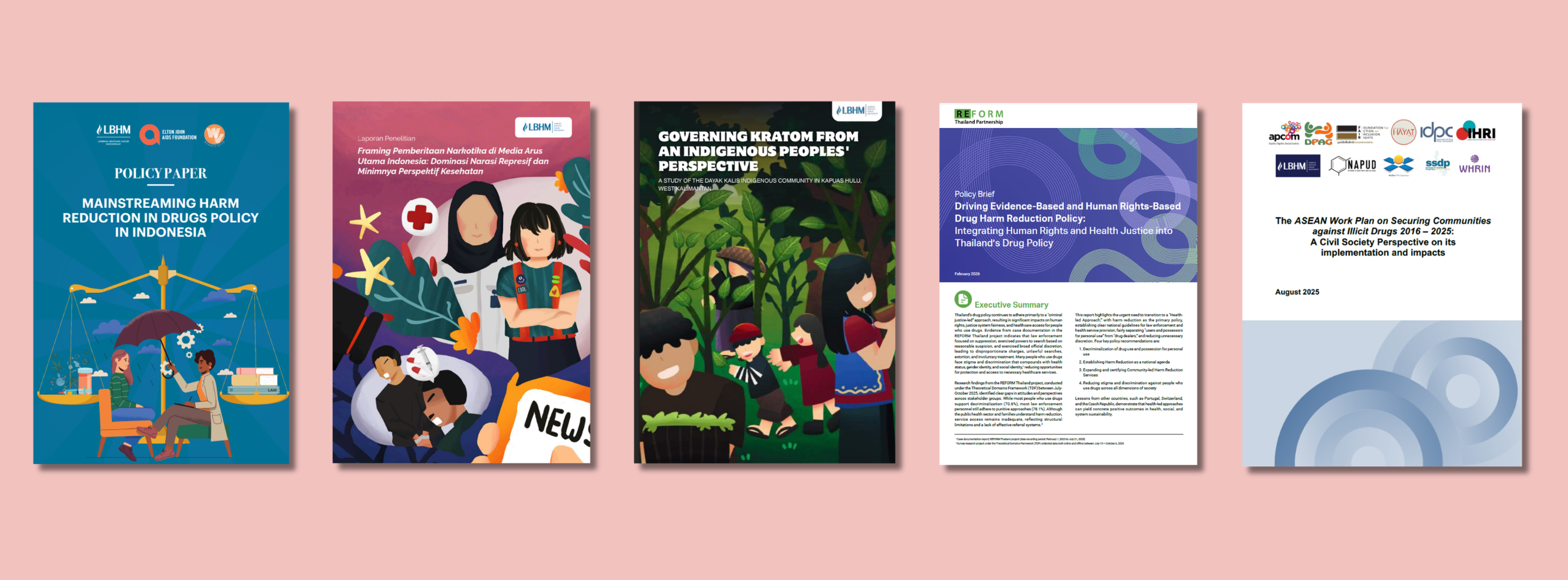
Indonesia
- Governing kratom from an indigenous peoples' perspective by the Community Legal Aid Institute (LBHM), 2026 (Indonesian / English)
- Research on narcotics news framing in Indonesian mainstream media: dominance of repressive narratives and lack of health perspective by the Community Legal Aid Institute (LBHM), 2026 (Indonesian)
- Mainstreaming harm reduction in drugs policy in Indonesia by the Community Legal Aid Institute (LBHM), 2024 (Indonesian / English)
Thailand
- Driving evidence-based and human rights-based drug harm reduction policy: Integrating human rights and health justice into Thailand’s drug policy by the REFORM Thailand Partnership, 2026 (Thai / English)
ASEAN
- Civil society perspectives on the ASEAN Work Plan on Drugs 2016–2025 – Submission to ASEAN review process by the International Drug Policy Consortium and partner organisations, 2025 (English)
Legal fellowship programme
One key activity supporting the development of emerging advocates is the fellowship programme, pairing new advocates with experienced mentors to engage people who use drugs in advancing access to justice. The programme is carried out in the Philippines, Myanmar and Malaysia.
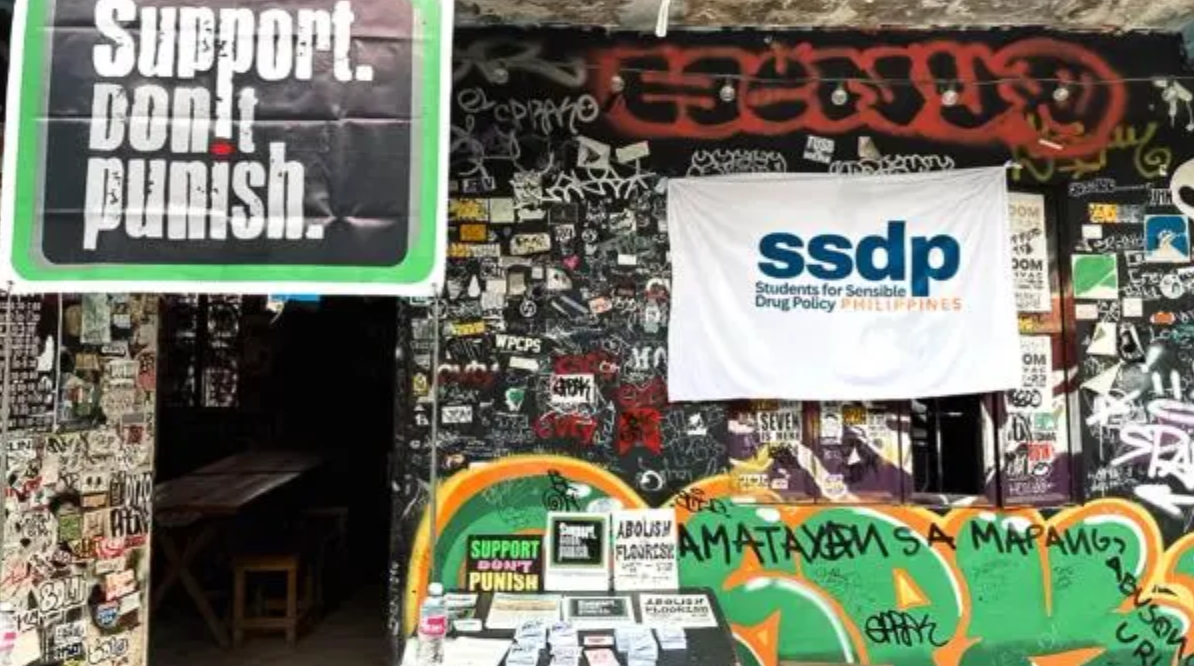
Legal fellowship in the Philippines
The Weaving Resistances Project in the Philippines provides community-led care for street-based youth impacted by punitive drug policies through the principles of transformative justice. This initiative has evolved into the Philippines chapter of Students for Sensible Drug Policy (SSDP), integrating local grassroots organising into a structured global movement for humane drug policy reform. (Read more)
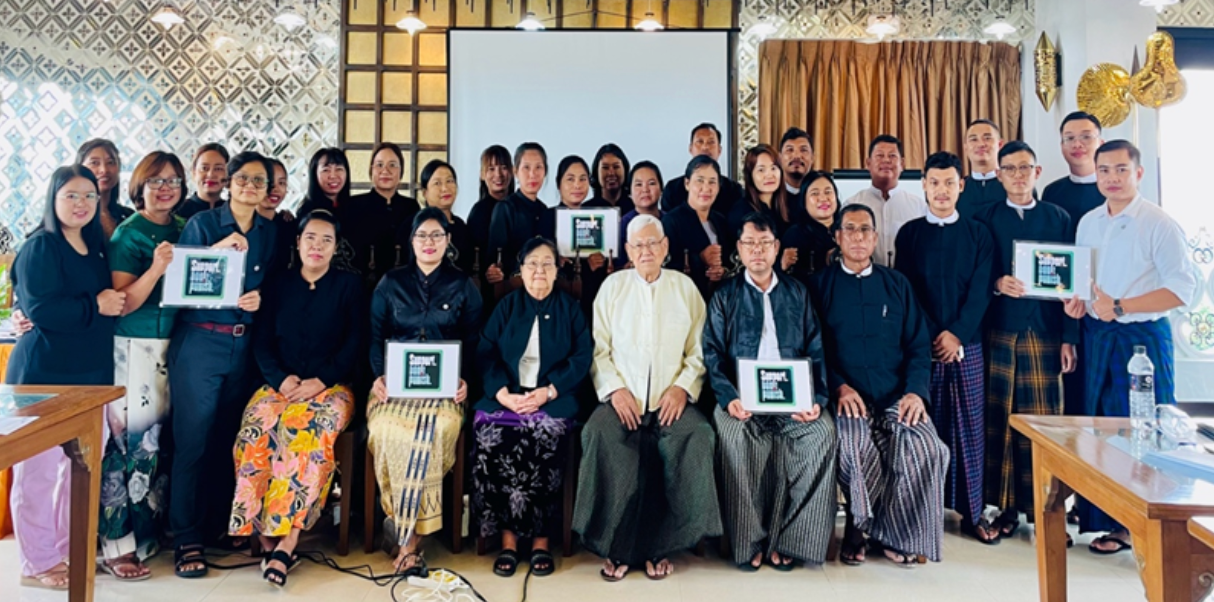
Legal fellowship in Myanmar
The International Bridges to Justice Myanmar provided five legal fellows with specialised training and mentorship to represent marginalised individuals facing drug-related charges. The programme achieved 45 case representations and engaged 101 stakeholders, successfully challenging punitive judicial practices and securing more lenient sentencing in several instances.
Legal fellowship in Malaysia
The fellowship in Malaysia focused on a research project to analyse the impacts of Section 39C of the Dangerous Drugs Act 1952, which escalates punishment for people caught with repeat offences relating to drug use and possession. The research aims to surface a largely overlooked dimension of how the system disproportionately punishes re-offenders. (Read more)
REFORM in the media
ASEAN
- Asean urged to end punitive drug laws, Bangkok Post, 5 Sep 2025
- Will Drug Policies in Asia Make a Turn Toward Human Rights in 2026?, The Diplomat, 3 Feb 2026
Philippines
- Before and after Duterte, Cebu group banners ‘better answer’ to drug war, Rappler, 12 Dec 2023
Thailand
- Activists call for a review of drug laws, Bangkok Post, 25 Dec 2023
- Army drug rehab plan sparks rights concerns, Bangkok Post, 15 Jan 2024
- Proposal submitted to the National Health Security Office (NHSO) to promote the Harm Reduction Service Package, The Active, 22 Feb 2024
- Barefoot Lawyer: From a person who uses drugs to a rights defender, Thairath Plus, 30 May 2024
Monitoring, evaluation and learning
Regions
Related Profiles
- LBH Masyarakat
- Foundation for Action on Inclusion Rights (FAIR)
- Health and Opportunity Network (HON)
- AKSI Keadilan Indonesia
- Institute of HIV Research and Innovation (IHRI)
- Drug Policy Advocacy Group
- International Bridges to Justice (IBJ)
- Malaysian AIDS Council (MAC)
- IDUCARE
- NoBox Philippines
- StreetLawPh