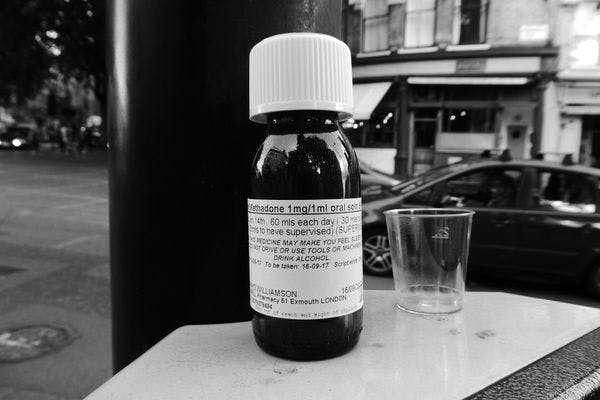
Held alongside the 79th World Health Assembly, this inter-ministerial dialogue will focus on accelerating access to opioid agonist maintenance therapy as an essential public health intervention.
Lebanon’s emergency extension of vital prescriptions shows how flexible, rights-based health responses can protect people who use drugs subjected to war and displacement.
Michaud et al. find that participants in the programme report greater autonomy, improved quality of life and stronger therapeutic relationships compared to prior experiences with opioid agonist treatment.
This collection aims to bring together articles and research addressing the global challenge of opioid access and the development of evidence-informed policies to achieve equitable, safe, and sustainable pain management.
As overdose deaths soar, Vancouver’s Drug User Liberation Front challenges prohibition itself, arguing the real crisis isn’t drug use but unsafe supply and systemic inequality
Ukraine has approved a new National Drug Policy strategy, which aims to improve access to controlled medicines, expand harm reduction programmes, and provide support to marginalized populations.
Voted by both houses of the Czech parliament, the bill would decriminalise cannabis home cultivation (up to 3 plants) and possession (up to 100g in private), and enable medical access to psilocybin.
The Thai government's abrupt end to cannabis decriminalisation threatens to shut down 90% of retail outlets, pushing people back into an unregulated market, without mechanisms of oversight and accountability.
Published 14 May 2025, WHO’s new guidance calls for bold, balanced drug policies that ensure fair access to controlled medicines. It updates 2011 rules with sharper focus on equity, harm reduction, pricing, regulation, and education - anchored in health rights and transparency.